
Businesses face difficulties because their outdated systems prevent them from developing new products while their operational expenses increase.
Most organizations do not understand how common this problem has become. Companies want to innovate, scale, and respond quickly to market changes, but their existing systems hold them back. The organization faces three main challenges because servers, which require costly upkeep, and applications, which need more staff to manage than to develop, and IT teams spend excessive time resolving problems instead of expanding the company. The issue stems from improper execution of infrastructure management. Cloud computing now serves as the basic technology that supports all digital transformation projects which organizations undertake today.
The Real Infrastructure Problem Businesses Face
Modern organizations need their IT systems to operate at higher speeds than traditional IT environments deliver. Legacy systems require constant maintenance, hardware upgrades, and manual intervention. Organizations must waste resources to maintain their infrastructure during peak periods because their actual need for resources extends throughout the year. Organizations lose both productivity and customer confidence because their systems experience downtime from outdated equipment.
As businesses grow, these limitations become more visible. The main duty of IT teams involves maintaining system operations, which prevents them from supporting innovative projects. Companies need flexible cloud infrastructure because it enables them to launch new services and enter new markets while supporting their remote teams, but current systems make this process slow and risky. Modern cloud services transform business operations through their capacity to provide effective computing solutions.
Why Cloud Is Central to Digital Transformation
The main function of cloud computing services centers around digital transformation. Digital transformation requires organizations to fundamentally shift their methods of creating and delivering value to their customers. The enterprise cloud platform enables organizations to implement the change because it delivers instant computing power which users can access from anywhere in the world while protecting their system against failures.
By 2025, industry research indicates that 83 percent of enterprise workloads will migrate to cloud computing services. Organizations that implement cloud migration strategies experience savings in IT expenses that reach 30 percent according to their reports. The numbers demonstrate a basic truth. The cloud represents an ongoing trend which organizations must adopt for their strategic success.
Common Challenges Without Cloud Adoption
The organizations that postpone their transition to cloud technology face ongoing operational issues. The process of scaling legacy systems becomes difficult because their integration with modern applications needs expensive resources. The system experiences more frequent breakdowns because its components have reached their aging stage. The system security becomes more vulnerable because the organization fails to apply security patches and maintain current security measures. The organization experiences a decrease in innovation because its teams remain dependent on fixed technological systems.
Organizations that attempt to modernize their operations face major difficulties when they lack a defined cloud implementation plan. The execution of migration plans which lack proper design implementation results in two problems. The cloud environment becomes just as inefficient as on premise systems when organizations fail to establish proper monitoring and governance processes.
How Cloud Services Enable Smarter Operations
Cloud solutions help organizations better handle their operational issues through proper implementation. Companies receive operational flexibility through cloud services which let them access computing resources and storage capabilities and software applications without having to handle physical servers. The system automatically adjusts resource capacity to meet actual user requirements which leads to better efficiency and decreased resource waste.
Cloud platforms enable organizations to implement new systems at a faster rate. Organizations can establish new systems within a few minutes instead of waiting several weeks. The built-in backup systems together with redundancy systems work to minimize downtime risk. Advanced cloud security systems defend against data breaches while maintaining regulatory compliance throughout different regions and business sectors.
The Moonsys Approach to Cloud Transformation
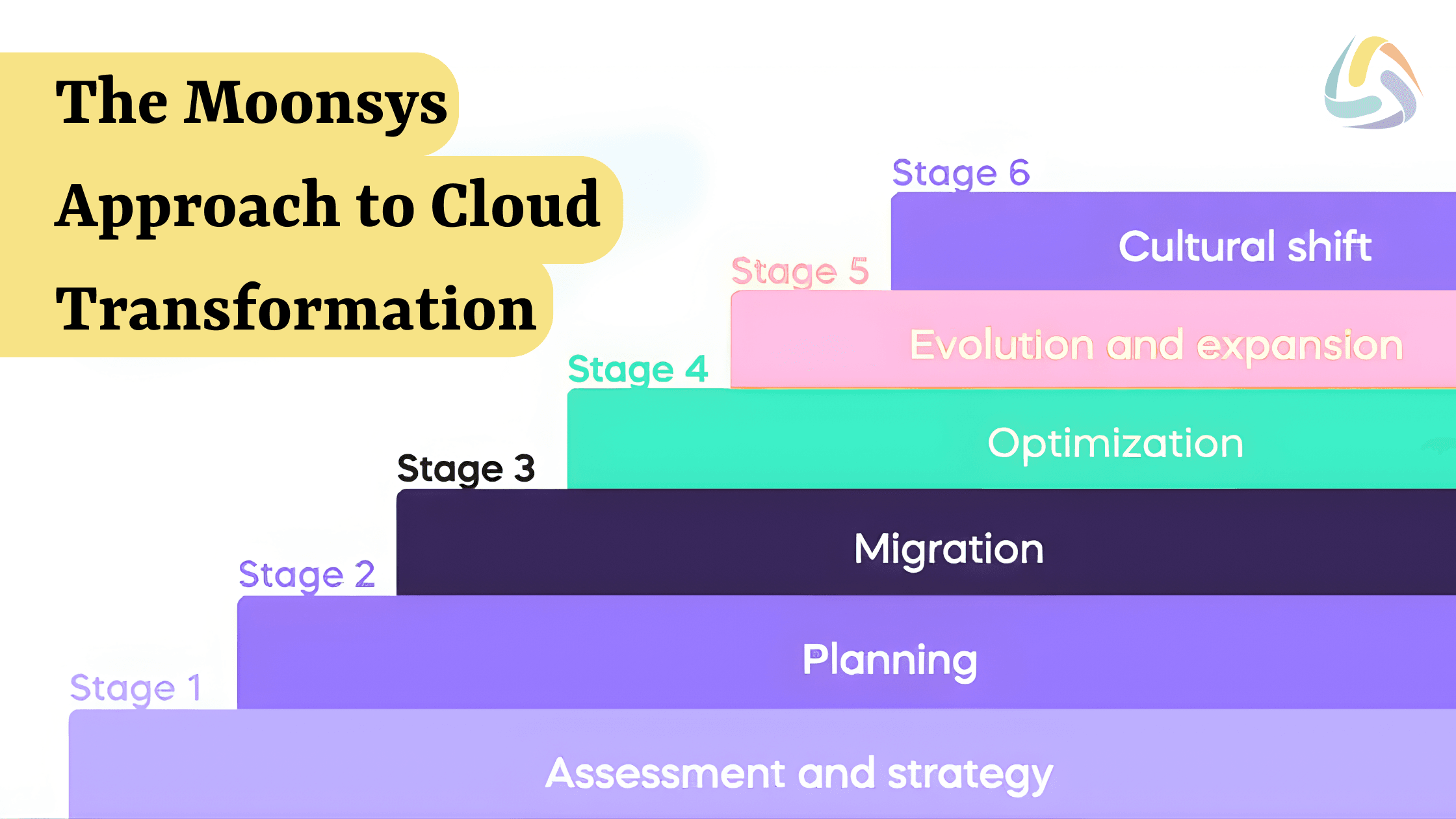 Our team at Moonsys assists organizations in implementing cloud services which bring about substantial business transformations instead of simply changing their IT infrastructure. The Cloud Solutions we offer implement business objectives through technology implementation. We assess current systems to identify performance deficiencies which affect system dependencies and cloud readiness.
We create a migration and architectural design which meets the requirements of operational processes. The organization needs to switch to new technology through public cloud and hybrid cloud and multiple service options with no operational interruptions. The organization operates its applications through secure migration processes which achieve resource efficiency and cost management from the first day of operation.
How Moonsys Cloud Services Work
The process begins with evaluating workloads which determines which components will be moved to the cloud and the methods for doing so. The system implements cloud architecture through using appropriate combinations of IaaS and PaaS and SaaS services. The team integrates existing applications through a planned process that ensures business operations continue without interruption.
The system requires active monitoring to track three key aspects which include performance and availability and security. The system provides ongoing optimization which enables companies to adjust their operations according to shifting customer demands. The managed approach enables companies to transform their cloud adoption into a permanent strategic advantage which extends beyond their initial implementation.
Real Impact of Cloud-Driven Transformation
The results of effective cloud adoption are measurable. Businesses experience up to 50 percent reduction in downtime because resilient infrastructure and automated recovery systems protect their operations. The systems gain better scalability which enables them to manage maximum traffic without experiencing any decline in their operational capabilities. The organization enables faster deployment of new services which drives both innovation and business expansion.
IT teams gain back their ability to concentrate on strategic initiatives. The team uses their time to work on projects which generate value for the business instead of maintaining server operations. Cloud environments provide organizations with three essential capabilities which include rapid deployment and adaptable solutions and strong operational power.
Cloud as a Foundation for Future Growth
Cloud services develop into essential capabilities for organizations that want to expand their future growth. Businesses require infrastructure that can adapt to their needs because their markets and customer requirements keep changing. Cloud services enable businesses to test new ideas while growing their operations and maintaining their competitive edge. The combination of governance and security with cloud systems establishes dependable elements that organizations can use to achieve their long-term objectives.
"Let your infrastructure stimulate innovation and not stifle it."
The cloud presents organizations with a straightforward solution when their outdated systems restrict further business development. Organizations can achieve digital transformation through proper partner selection and strategic implementation.