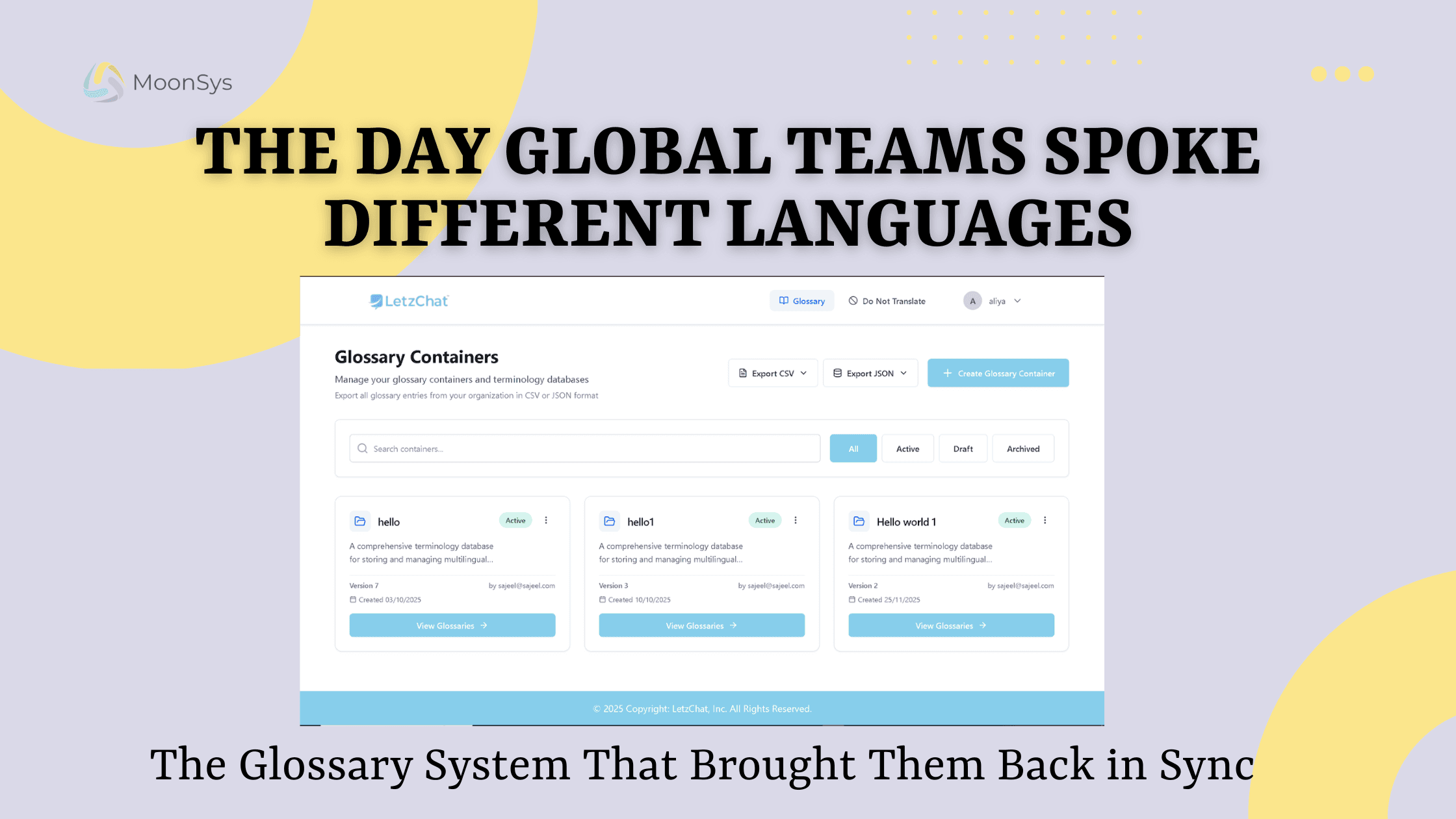
Does your company ever experience a global launch of a product and despite everything working perfectly from the technical standpoint you still get the feeling that something is wrong? The features were stable the interface was polished and the translations were done on time. However, users were left perplexed the number of support tickets rose and there was a disagreement among the internal teams regarding the naming of certain features. This kind of communication breakdown usually comes as a surprise to companies as they are already employing a GPT translator to quicken their global presence and scale up. What they find out too late is that being fast is not the same as being understood. Misunderstood terminologies lead to language division in a silent manner wherein the divisions are across markets, teams and customer touchpoints.
Wherever the global players continue growing, content is the first thing that multiplies in great numbers. Product management interfaces, release notes, user onboarding flows, marketing campaigns and support documentation are among the content that must always be available in various languages. And thanks to AI-powered tools, this has been made possible at an unheard-of pace. GPT translation has unbound traditional hindrances and allowed the conduits of the team to publish at lightning speed. But what is efficiency in case of everyone currying their own translation independent of others with no shared terminology rules to follow? Instead of one person making a small difference in wording, the entire communication system in the organization is going to have a misunderstanding due to the fact that it is going to be difficult to tell where the problem lies.
The Problem: Fast Translation Without Terminology Control Creates Confusion
AI has indeed revolutionized international communications in a big way. The new ChatGPT-based translation tools allow the team to convert even huge amounts of texts into different languages in minutes, not in days. However, the fast translation is not always the same as the clearer one. Today, one of the most common problems that companies have to face is not incorrect translations anymore but rather inconsistent translations. The same idea can be expressed in various ways which in turn when placed in different locations may confuse the users and even internally the teams may get frustrated.
Organizations are most likely to encounter the following problems:
- Different teams translating the same term in different ways
- Brand names and product features accidentally translated
- No single source of truth for approved terminology
- Endless review cycles and last-minute fixes
- Confusion between translators, reviewers, product teams and support
The situation is even worse for the teams that strictly adhere to the use of ChatGPT translation workflows because they have to deal with terminology rules that are scattered all over the company in spreadsheets, documents and emails. There is no enforcement of terminology rules, no ownership and no way to ensure consistency that is clear. With the increase in content volume the terminology issues get bigger which makes new releases riskier than the previous ones.
The Shift: Realizing Translation Was Never the Real Issue
Ultimately, a pattern cannot be overlooked anymore. Teams see that they are repeatedly reviewing the same terms. Meetings are held to discuss wording instead of bringing products up to the mark. Supporting groups question why the different language of the interface and the help center. Many organizations accept the fact that they have a translation problem but a terminology control issue.
Even the most sophisticated GPT translator cannot tell which version of a term is accurate without being presented with the right context. AIs mirror their inputs and the rules they are given. If those rules are not there, inconsistency is bound to occur. This realization is the turning point. Teams now instead of asking how to translate faster inquire about how language decisions are made, who approves them and where they get reused throughout the organization.
The Market Gap: Why Terminology Is Still Poorly Managed
Although it is vital for maintaining a consistent brand image and a good user experience the management of terminologies still ranks low and is often overlooked in localization workflows. Many firms still depend on manually updated glossaries that become obsolete as soon as they are created. There is no version history to see what has changed, no approval flow to confirm the correctness of decisions and no automated processes to carry out the rules.
Organizations, even the ones that extensively utilize GPT translating tools, usually consider terminology as a last Precedence. Do-Not-Translate rules are solely dependent on the users' memory. Brand language is confined to informal knowledge rather than included in established systems. As companies expand their markets globally, this gap becomes even riskier. One wrong term can have legal repercussions, can mislead the users and can cause the brand to lose its credibility in whole regions.
The Vision: Treating Terminology Like a Business Asset
 The first stage of the solution is to change the way of thinking. Terminology is not useless documentation. It is an essential business asset that justifies the same organization as code, design systems and product configurations. When it comes to AI terminology management, organizations are in a position to direct the output of AI rather than being in the constant mode of correcting it.
The approach of a main glossary media is clear in a system One established truth. Every language in agreement. When the terminology is managed from the origin, translation becomes both predictable and scalable. Instead of causing delays, the structure takes away friction by cancelling out the need for repeated discussions and reworking.
The Build Journey: Designed From Real Localization Pain
The Glossary Management System was not created in theory. It was formed by the real issues faced by the localization, product, and marketing teams. They wanted a solution to let them divide the terminology by project and product. They needed the roles so the editors, reviewers and administrators would know their responsibilities clearly. They needed the approval workflows to make it clear when and where the decisions were made rather than having them debated over and over again.
Version control became vital in order to monitor the evolution of language. The context notes were added for the translators to be able to infer the intention. The bulk actions were rolled out to manage the volume. More significantly, the system was built with the intention of easy integration with GPT translator workflows so that the approved terminology would automatically direct the translation output rather than being subjected to manual checks.
The Solution: A Glossary Management System Built for Scale
 The outcome is an enterprise-level Glossary Management System that will be able to create a unified multilingual content across different branches, tools and markets. It works as the ultimate layer that is placed upon the translation engines giving the users full control of the process and continuous quality assurance without compromising the rate of the work. By embedding a structured translation glossary system into daily workflows, organizations gain clarity and control over their language.
Rather than addressing inconsistencies after the content has been made available, the groups will thwart them before they happen during the process of translation. Thus, the language is going to be stable, and it can be reused and will be in line with the brand's intention. Such a situation will lead to a reversal of the position of translation from being a reactive task to a strategic capability.
Do-Not-Translate Terms: Protecting Brand and Legal Language Across Markets
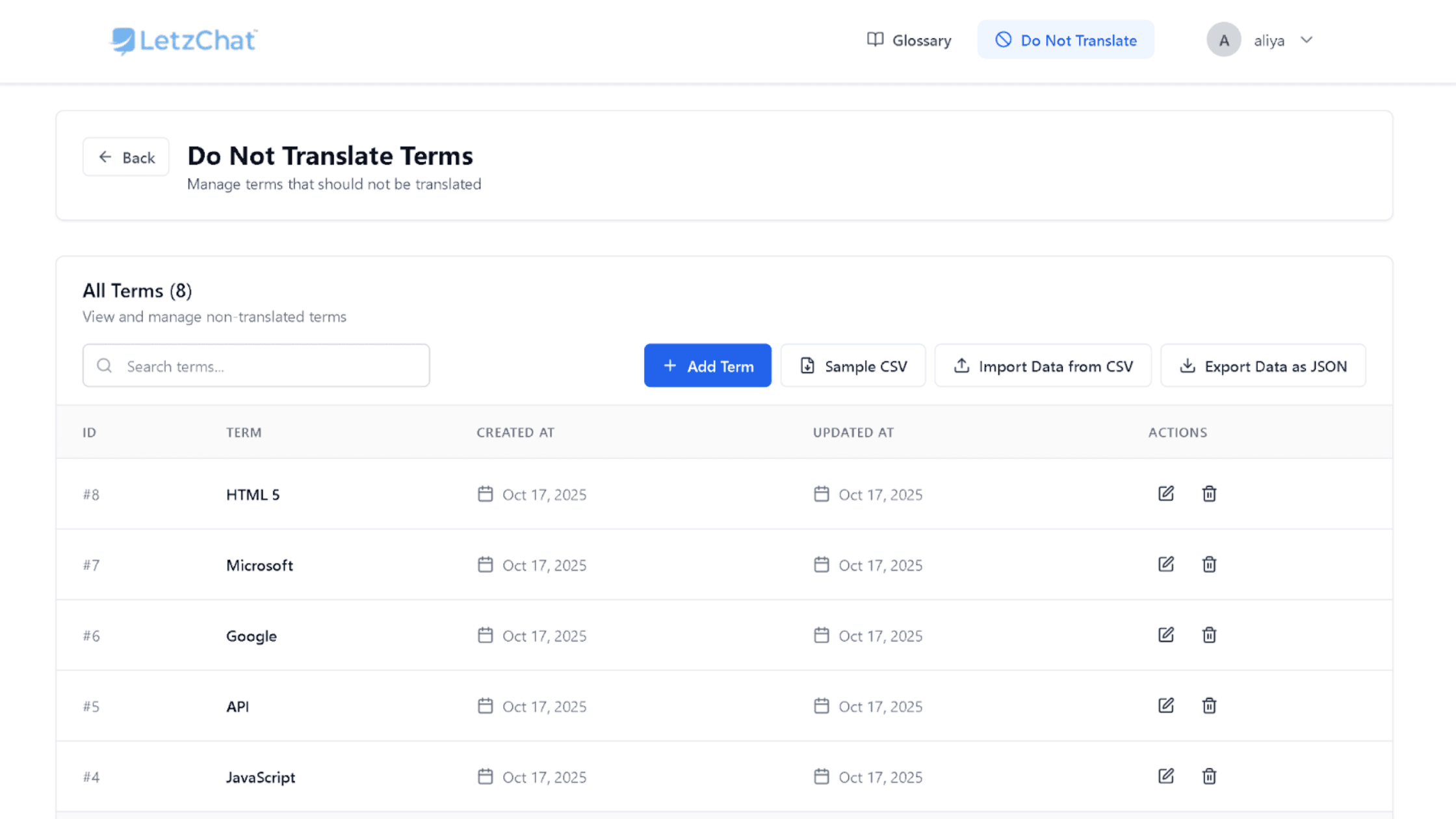 Terminology control mainly involves the Do-Not-Translate terms management which is extremely important. Brand names, product features, legal phrases, technical identifiers and campaign slogans are the types of terms that usually need to remain unchanged in every language. Without very clear rules, these terms are often translated by mistake even if the teams use the most advanced GPT translator workflows. A centralized system removes this chance by already having Do-Not-Translate entries very clearly defined and enforcing them automatically during translation. This way, it is guaranteed that there will be no brand dilution, legal accuracy will be protected and critical terminology will be consistent across all markets no matter the language or region.
Across Teams, How the System Works
A term is introduced once and then it is stored in a central place. The author adds context to tell how the word is to be used. Translation is then done and the right people check and give their approval. Once the term is approved, it becomes an official version that is used everywhere. If a piece of writing goes through the system the system will ensure that pre-approved words are used throughout. This improves multilingual team collaboration by giving everyone confidence that they are working from the same source of truth.
The whole operation is without any guesswork. Translators will not be left to their own devices to get the meaning right. Reviewers will not have to go through the exercise of debating the terminology again and again. Product teams will not have to worry anymore about having language that does not match in different markets.
Real-World Impact: From Terminology Chaos to Consistency
There are indeed immediate results for companies that start to manage their terminology in a structured manner. The review cycles get shortened. The errors in the branding disappear. The content of the UI, marketing and support finally come together in all the languages. By bringing together governance with translate GPT workflows, the teams get the speed up without consistency down.
One worldwide product team cut down the terminology review period by more than half. Another one got rid of brand translation errors completely. In all cases, the improvement came not from translating faster but from translating smarter.
Why Terminology Control Matters More Than Ever
The companies of today are working in different parts of the world and communicating in various languages and cultures at the same time. Customers want to feel clear, consistent and trusted with their point at every touchpoint. When the language is not consistent, trust is lost very quickly. If there is no control then fast translation can be even more harmful than slow translation ever was.
To use GPT translation responsibly means to combine intelligence with structure. When terminology is well-governed, AI is regarded as a trustworthy partner not a source of risk. That is why it is so important for companies to scale globally with confidence instead of fear.
Language Alignment Restoration
On the Day When Global Teams Spoke in Different Tongues; and a Glossary System Did Restore Synchronization in Business
With a global business comes the necessity of language alignment. A centralized glossary system ensures that every team in every area speaks the same language. Particularly combined with the GPT workflows of the present, this delivers clarity, consistency and control towards not retardation of growth.
Your teams go at it again at a faster pace. And there is language alignment from here on; In this capitalistic world of brand at last!