
The Importance of Brand Identity in a Multilingual World
A brand in the world's global market today is no longer a thing of one language or one particular place. Every product, service and digital experience is consumed wherever and however across borders, cultures, and even time zones. The risk of brand identity being represented differently through different languages is the major drawback of expansion, even though it is a good thing. In English, a slogan may come off as self-assured in French, however, it may lose that quality and just sound ordinary. Clear German may just disappear in the vague Spanish. These differences do not always result from poor translation; in fact, they are more often than not the result of the lack of centralized control over terminology, tone and messaging.
The organizations that heavily depend on ai translation tools and artificial intelligence online translation platforms for scaling content, brand integrity becomes more perplexing. Consistency cannot be guaranteed just by speed. Thus, the need for structured glossary management arises. A Glossary Management System (GMS) treats brand language as a strategic asset rather than an afterthought. When used with modern ai translation software, it enables companies to enter new markets without sounding different in terms of voice, values and message.
Glossary as a Brand Tool, Not Just a Linguistic Resource
A glossary is frequently seen as just a simple list of words with translations. However, when it is well managed, it actually becomes a very strong brand control mechanism. A GMS not only defines what words mean but also how they should be used, translated and preserved across languages. Thus, the brand’s personality, tone and intent will remain the same whether the content is translated by humans and goes through AI translator systems. The brand identity is created through the use of consistent and repeated language. The product, the branding elements, the slogans and even the error messages are all part of the brand perception by the users. This is why there should be central control because otherwise, different teams and suppliers may translate the same word differently leading to the gradual loss of brand recognition. A GMS procedure can prevent this issue by integrating going through the translation quality management process where the approved terms are used only.
How a GMS Protects Brand Voice
A glossary well-implemented has a couple of significant ways of showing its support for the brand consistency:
- The ones for the brand-specific terms are the translations that are to be approved
- Product names, slogans and legal phrases to be Do-Not-Translate are locked when needed
- So that the tone and the intent are kept, context notes are provided
- AI outputs are aligned with brand-approved language rules
- The interpretation that is subjective is reduced across markets
A glossary when integrated with ai tool for translation is an active guide instead of being a passive document. The outcome is the faster localization that is not sacrificing the identity.
The Role of AI and Glossaries in Modern Localization Workflows
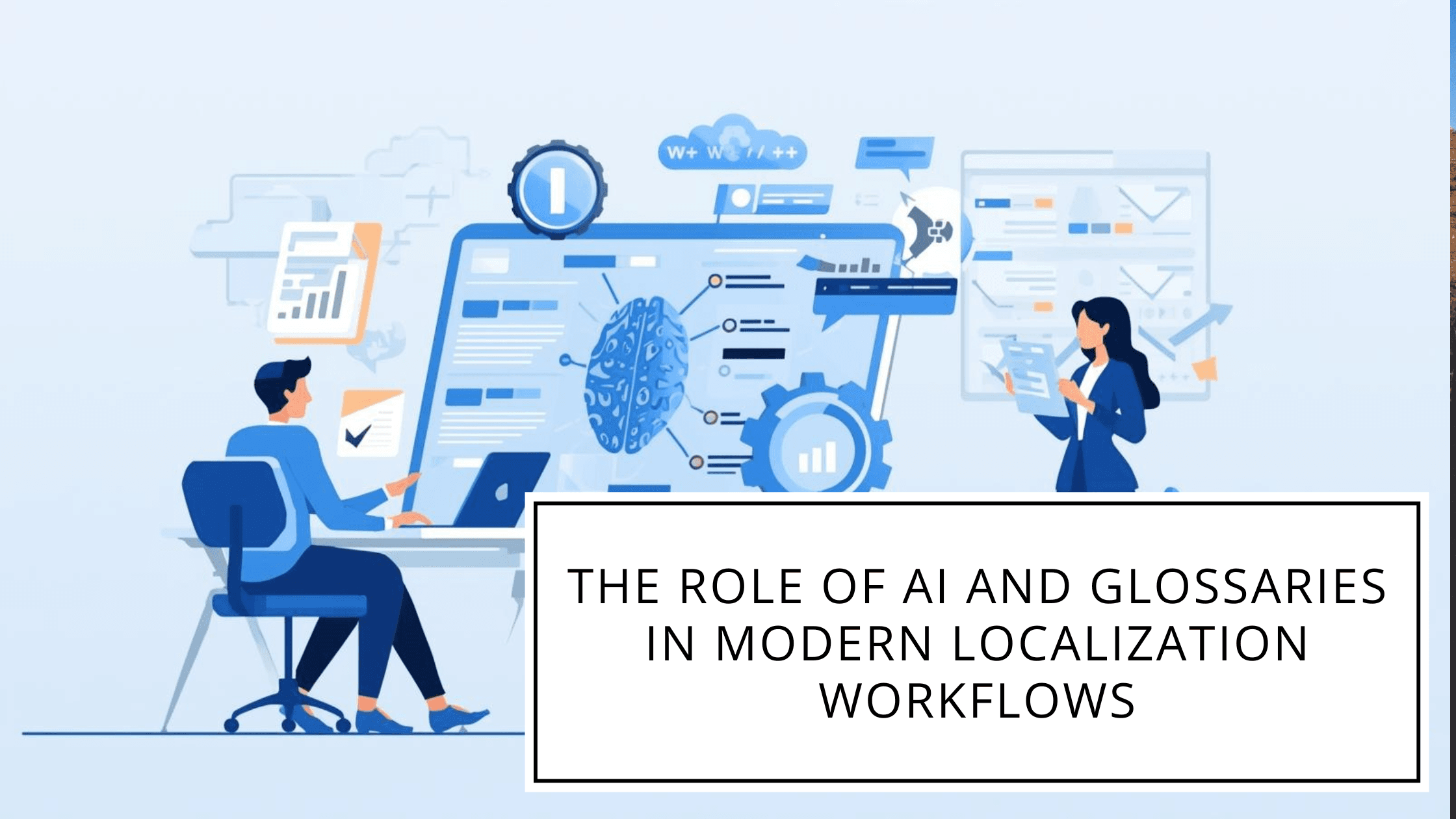 The use of artificial intelligence has changed the way companies deal with multilingual content. The tools that are powered by deep translate AI and neural models can easily and quickly process a big amount of text. However, the AI systems work with probability, not brand awareness. They might end up choosing the linguistically correct but brand-inconsistent terms without any guidance. A GMS gives the necessary layer of control that is missing.
By combining glossary rules with ai translation software, companies make sure that the AI outputs comply with the defined terminology standards. This mixed approach takes advantage of the speed of automation combined with the discipline of brand governance. AI models will become more accurate, predictable and brand-aware when they are aligned with the glossary data over time.
This method not only improved but also elevated collaboration among the various departments. The marketing department, the product department, the legal department, and the support department all have the same source of terminology which leads to the reduction of friction and misalignment. In this way, a glossary changes its role from being just a translating tool to being a foundational part of the localization management platform.
How Global Brands Use GMS to Stay Consistent
Technology and SaaS Companies
By implementing a GMS along with ai translate workflows to fix UI terminology in 18 languages, a global SaaS provider is now able to keep that unification throughout the user experience in every market. Consequently by incorporating feature names and contextual notes in the glossary, the company was able to cut down on corrections after the release, thus increasing the regions' user adoption rate.
Global Pharmaceutical Companies
In the healthcare industry, brand trust depends on nothing but precision. A worldwide company producing medical instruments resorted to a glossary system to unify product names and scientific terms across regulatory and user materials. The firm which was already on the fast track of launching products internationally does not mind the hassle since it has the market's trust. Critical terms were secured against alterations to guarantee understanding on the part of both clinicians and regulators.
Retail and Consumer Brands
Retail brands place a lot of importance on emotional tone and consistency. A worldwide ecommerce company applied a GMS among its content localization management systems to unite product descriptions, category names and marketing messages. Words like “Shipment,” “Checkout” and branded campaign phrases were made uniform in all languages. This similarity boosted customer trust and also led to higher conversion rates in the global markets.
Best Practices for Aligning Your GMS With Brand Identity
Implementing a GMS is a technical task, but it is also a strategic initiative. Organizations may apply these best practices for ensuring alignment with brand identity:
- Involve brand, marketing and product teams in glossary creation
- Define tone, usage notes and contextual guidance for key terms
- Establish approval workflows and ownership for terminology changes
- Integrate the glossary directly into ai translate online workflows
- Regularly audit glossary usage and translation outcomes
Treat terminology updates as part of brand governance, not translation cleanup When companies apply these practices to their daily operations, they are able to change terminology management into a process that is not only repeatable but also scalable, thus supporting both speed and quality.
Why Glossary Governance Matters More Than Ever
 The adoption of automation by organizations will result in a higher inconsistency risk. AI systems may produce translations quickly but the unstructured input may cause generically slight differences which in turn would eventually ruin the brand identity. A GMS guarantees that the automation process is within the defined limits, thus giving protection to the brand equity in the long run.
This is especially true for companies that are dealing with a number of different service providers, agencies and internal staff at the same time. A universal glossary serves as a common source of information, thus decreasing arguments, redoing work, and making decisions based on personal opinions. If used together with translation quality management, it leads to the possibility of measuring the improvement in consistency and efficiency.
Aligning GMS With Your Brand Strategy
Brand identity is no longer easy to maintain across languages. It is a requirement for business for any company which has global operations. The structure, control and scalability that a Glossary Management System offers are the qualities that the organization needs for achieving this objective. The integration of such a system with ai translation tools, deep translate AI and modern localization platforms, ensures that speed goes along with quality.
When glossary management is synchronized with the overall brand strategy, businesses do not only acquire better translations. They also gain trust, clarity and control of the perception of their brand worldwide. In the digital economy where multiple languages are spoken, that control is a competitive advantage.