For a long time, the problems related to the glossary have been silently misclassified as translation problems. When the terminology fails, the translators, language quality and even the tools are the first to be blamed. However, this kind of thinking is not suitable for modern global organizations. The translators are probably the last ones to be blamed for the chaos of terminology; its real source is hidden in the product roadmaps, legal definitions, marketing positioning and customer support language. The more companies scale their automated translations, the more they will be facing the problem of glossary failures that reveal something deeper: a breakdown in operational ownership not linguistic ability.
The gap in ownership that nobody talks about is actually the case, however; terminology is created long before any content enters the translation process. The product team gives names to the features. The legal teams use the language that is regulated and approved. The marketers cultivate the voice of the brand. The support teams maintain the terminology through everyday interactions with customers. By the time translation starts, the language decisions have already been made often inconsistently. When glossary issues arise, they are signs of disconnected operations not poor translation quality.
The Ownership Gap No One Talks About
Most enterprises assume that glossaries are the property of localization teams just because the translators are the ones that use them. That assumption creates a structural blind spot. Translators consume terminology but they rarely own it. They do not have a say in what terms are approved, deprecated and protected. Those decisions are made across departments, usually without coordination. This is the reason why glossary problems continue to persist even in organizations that have mature cross-department collaboration on paper.
With the advancement of products, new teams keep on introducing new terms at a fast pace. The names of the features are altered. There are updates in the legal language. The new expressions are introduced through the marketing campaigns. Different support teams adopt different ways of talking to demonstrate quickly the complexity of the ideas. The absence of a common operational framework allows each team to operate separately. The translation teams are then expected to “repair” the inconsistencies downstream even if they had no control upstream. This disconnection inevitably leads to the problem of glossaries.
Ways Glossaries Go By the Wayside
As the result of the fact that there is no single team to take ownership of terminology as an operational asset, glossaries tend to deteriorate through time. They begin with the best of intentions and finally become fragmented, out-of-date and totally neglected. In a lot of big companies, glossaries are presented in the following ways:
Cross-team shared spreadsheets
PDFs linked to the documents for new employees
Motionless files saved in the common drives
Dead documents that no one edits
These different formats do not have the support of any processes, the management of their life cycle, and they do not imply any accountability. It is not clear who is going to approve the changes, who is going to keep track of the updates and who is going to make sure the glossary is used. Therefore, management of the glossary becomes reactive. The teams look at it only when something goes wrong, usually it happens during a very stressed release. It is not the tools that are at fault but the operational design flaw in the translation operations instead.
Why Translation Quality Suffers Even with Good AI
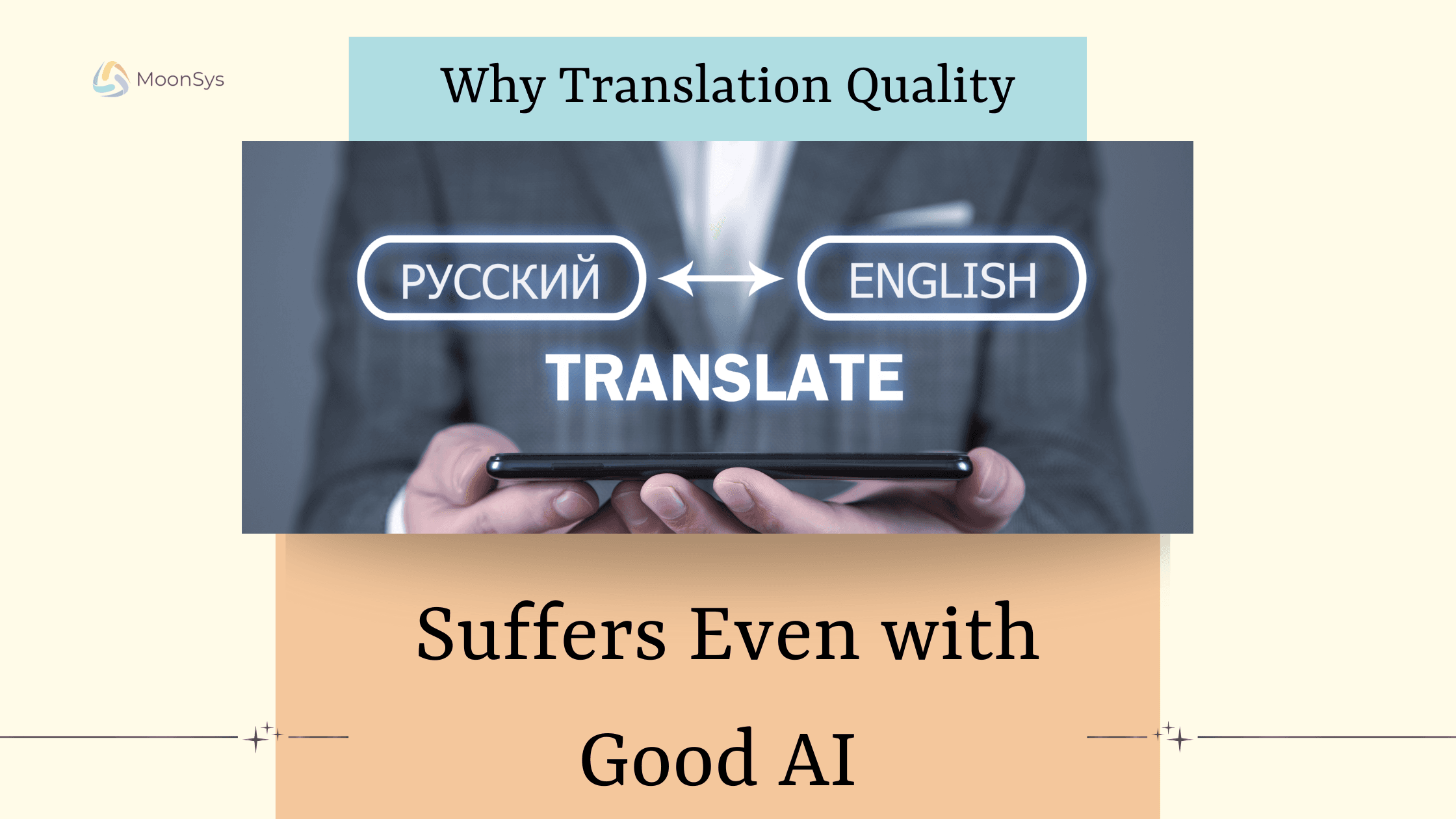 An organization is often mistaken in thinking that enhancing AI models will automatically lead to the termination issue getting resolved. They spend on more powerful engines, more clever prompts and quicker pipelines. Though such upgrades are helpful, they do not tackle the fundamental issue. AI can only function according to the guidelines it is provided with. In the absence of proper governance for terminology, the best models will still produce output that varies in quality. That's the reason why companies with high-end AI translation workflow setups face the same problems related to glossaries, year after year.
Inconsistency is the worst thing that can happen when terminology is not managed. AI just amplifies this inconsistency and does it faster. Different teams give different inputs. Different contexts produce different outputs. Review cycles become longer, not shorter. Translation quality goes through the roof in terms of unpredictability not because the technology is bad but because the operational foundation is lacking.
What “Management” Actually Means in a Glossary System
The real deal in glossary management is not just about the storage of words. It’s all about controlling the decisions taken. In an operational context, the management is about the specification of how terminology is to be created, approved, changed and finally, retired over a period of time. A proper system brings in a structure that files cannot provide. This encompasses versioning so that the teams are aware of when and why the terms change, approval flows that assign the authority and change tracking that brings about transparency.
Role-based access is of equal importance. Not everybody should have the power to alter the terminology. People from the product, legal and brand departments as well as other stakeholders should have defined responsibilities. Having an audit trail is a way of ensuring that the enterprises are able to follow the reasoning behind their decisions which is particularly vital in regulated sectors. This degree of control changes the perception of terminology management from that of a passive reference to an active operational system.
Static Glossaries Are Not Possible in Enterprise Scale
The concept of static glossaries is the way of presuming stability whereas on the other hand, clanging companies are in the very middle of the fashioning process. Products change continuously with manufacturers outdoing each other each week. Consumer markets are also opening up at an astounding speed. Moreover, the same applies to regulations. Static files Are not able to handle these fast-paced changes. They are very reliant on manual processes for updates, enforcement, and communication which all the more expose them to the risk of errors. That is when the teams are said to be relying on static glossaries that is when the degree of consistency is on the human memory and discipline which is no way a good way to scale.
On the other hand, managed systems bring the benefits of repeatability and control. It is a one-off decision that is made about the terminology and that is the one that is going to be reused everywhere. The updates will be propagating all the time and concurrently. In practice, the enforcement will be embedded in the workflows. This marks the clear divide between documentation and operations. For enterprise localization this change is not a matter of choice. It is indeed the only way to keep up the same standard of quality across countless markets and content assets.
Making Glossary Management a Core Operations Function
The scenario changes considerably when organizations consider glossaries management to be an operational responsibility. Terminology becomes one with the product governance. Legal language is underpinned by the process rather than by reminders. Marketing messages stay the same in different countries. Customer Support teams use the product language the customers see. Translators do not have to struggle anymore as they have become facilitators.
The natural alignment of such an approach with the translation automation strategies is undeniable. Automation is only as good as the rules that are crisp and stable. A well-managed glossary provides such rules. It does not act as a bottleneck for the teams but rather as a friction remover by cutting out the need for repetitive discussions and corrections. The operations leaders can now predict with certainty what is going to happen. Product leaders can be confident. And localization teams will be more efficient.
Why This Perspective Resonates Beyond Localization Teams
 The operational vision behind this reasoning is that the managing of glossaries is becoming more and more popular with stakeholders who are outside the traditional language departments. Operations managers see the repetition of work and its inefficient nature. Product leaders are aware of the inconsistency in naming as a risk. Corporate buyers perceive the technical language as a part of brand governance and risk management along with translation support not the other way around.
The organizations that are supporting glossary management through translation operations are thus elevating it from a fringe issue to a strategic capability. It becomes the very business of global scaling and not just an afterthought that is handled at the end of the content pipeline.
Closing Insight: Terminology Is an Operational Asset
Every glossaries problem has its roots not in the translation tools but in the language areas, and these problems cannot be solved only there. They originate where the linguistic decisions are made and are exacerbated by the lack of accountability. Treating terminology as an operational asset brings a new way for organizations to scale, collaborate and communicate globally. It introduces a structure to automation, a clarity to collaboration and a control to growth.
If your organization is investing a lot in automated translations and AI-driven workflows but still facing the issue of inconsistency the culprit is neither your translators nor your technology. It is indeed the way terminology is managed and not managed throughout the whole operation.
The question is no longer if you need a glossary. The real question is if you are ready to treat it as a truly valuable enterprise asset.